


University

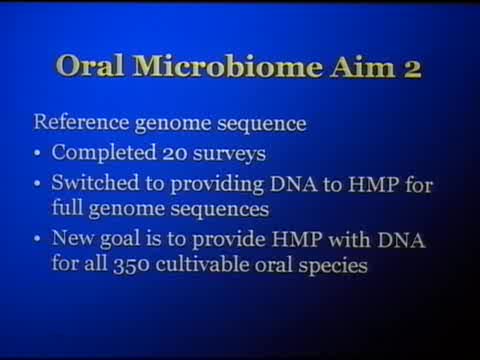
The Human Oral Microbiome by Floyd Dewhirst, Harvard University
submitted by: dougramsey
The human oral cavity is a diverse habitat that contains approximately bacterial 600 predominant species. The oral microbiome is comprised of 44% named species, 12% isolates representing unnamed species, and 44% phylotypes known only from 16S rRNA based cloning studies. Species from 11 phyla have been identified: Firmicutes (211), Bacteroidetes (106), Proteobacteria (99), Actinobacteria (64), Spirochaetes (49), Fusobacteria (29), TM7 (12), Synergistetes (10), Chlamydiae (1), Chloroflexi (1)...
ES4FUN 1.0 - Structures and functionalities

submitted by: es4fun
ES4FUN is a Physics-driven educational project with the aim of spreading universal scientific concepts in a game context, with research high-tech and audio+video clip support
Multitudinary games were designed and implemented to spread the concepts "structures and functionalities" which are shared by all the scientific disciplines.
The clip has been made with the graphic material recorded during the ES4FUN 1.0 event at the car parking of the Science and Technology Campus of the...
ES4FUN 2.2 - Feedback and structural symmetries

submitted by: es4fun
ES4FUN is a Physics-driven educational project with the aim of spreading universal scientific concepts in a game context, with research high-tech and audio+video clip support
Interactive video games have been implemented with LabVIEW to highlight the concepts feedback and structural symmetries.
The clip has been made with the graphic material recorded during the III Workshop on Teaching Innovation in Chemistry (University of Cadiz, 23-25 June 2008), in collaboration with the UCADanza...
MWV02 -AMNH - Save the Microbes Save the World – Part 1
submitted by: MicrobeWorld
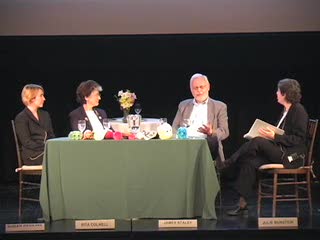
Part 1 of a video podcast from the American Museum of Natural Historys 2007 Mack Lipkin Man and Nature Series entitled Save the Microbes, Save the World: The Fate of Microbial Life on a Changing Planet. The panel was introduced by Michael Novacek, Senior Vice President and Provost of Science for the AMNH and moderated by Julie Burstein, Public Radio International and WNYC Radio’s Studio 360.
Panelists include:
# Rita Colwell, Distinguished University Professor, University of Maryland...
HIV/AIDS Education in America (MWV14)
submitted by: MicrobeWorld
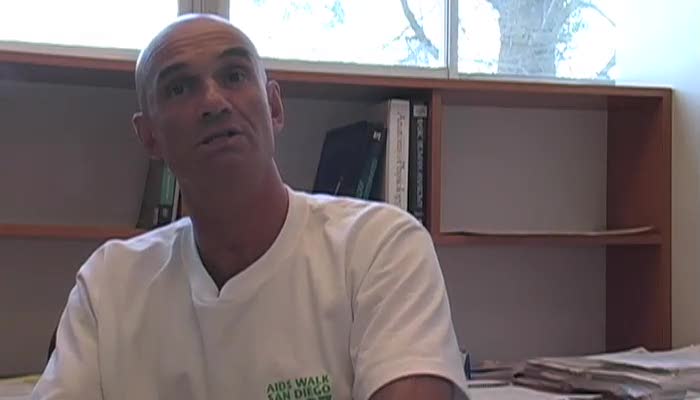
In this episode of MicrobeWorld Video we ask some leading researchers, education specialists, and public health officials about the state of HIV/AIDS education in America and ideas they have to support the teaching of microbial evolution using the latest HIV/AIDS research ó all while instilling innovative prevention strategies.
Filmed at a forum for educators on February, 11, 2008 at the Koshland Science Museum in Washington, D.C. and at San Diego State University, this episode features...