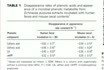

The assessment of iron status where infections are common is complicated by the effects of inflammation on iron
indicators and in this study we compared approaches that adjust for this influence. Blood was collected in 680 children
(aged 6–35 mo) and indicators of iron status [(hemoglobin (Hb), zinc protoporphyrin (ZP), ferritin, transferrin receptor (TfR),
and TfR/ferritin index)] and subclinical inflammation [(the acute phase proteins (APP) C-reactive protein (CRP), and a-1-acid
glycoprotein (AGP)] were determined. Malaria parasitemia was assessed. Subclinical inflammation was defined as CRP
.5 mg/L and/or AGP.1 g/L). Four groups were defined based on APP levels: reference (normal CRP and AGP), incubation
(raised CRP and normal AGP), early convalescence (raised CRP and AGP), and late convalescence (normal CRP and raised
AGP). Correction factors (CF) were estimated as the ratios of geometric means of iron indicators to the reference group of
those for each inflammation group. Corrected values of iron indicators within inflammation groups were obtained by
multiplying values by their respective group CF. CRP correlated with AGP (r = 0.65; P , 0.001), ferritin (r = 0.38; P ,
0.001), Hb (r = 20.27; P , 0.001), and ZP (r = 0.16; P , 0.001); AGP was correlated with ferritin (r = 0.39; P , 0.001), Hb
(r = 20.29; P , 0.001), and ZP (r = 0.24; P , 0.001). Use of CF to adjust for inflammation increased the prevalence of ID
based on ferritin , 12 mg/L by 34% (from 27 to 41%). Applying the CF strengthened the expected relationship between
Hb and ferritin (r = 0.10; P = 0.013 vs. r = 0.20; P , 0.001, before and after adjustment, respectively). Although the use of
CF to adjust for inflammation appears indicated, further work is needed to confirm that this approach improves the
accuracy of assessment of ID.
« Hide